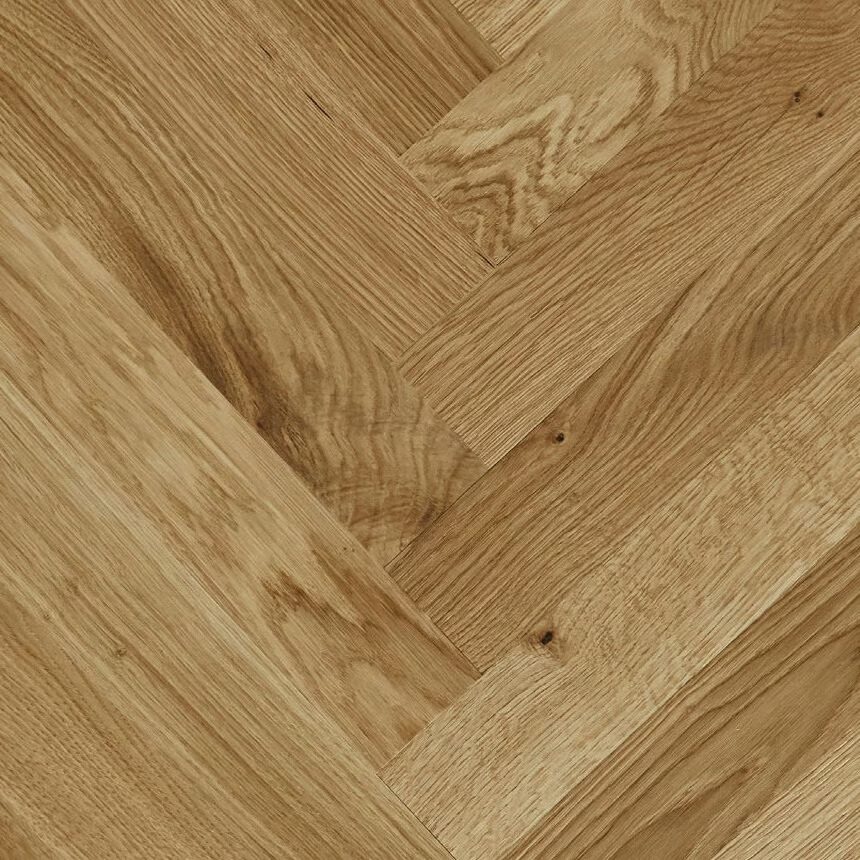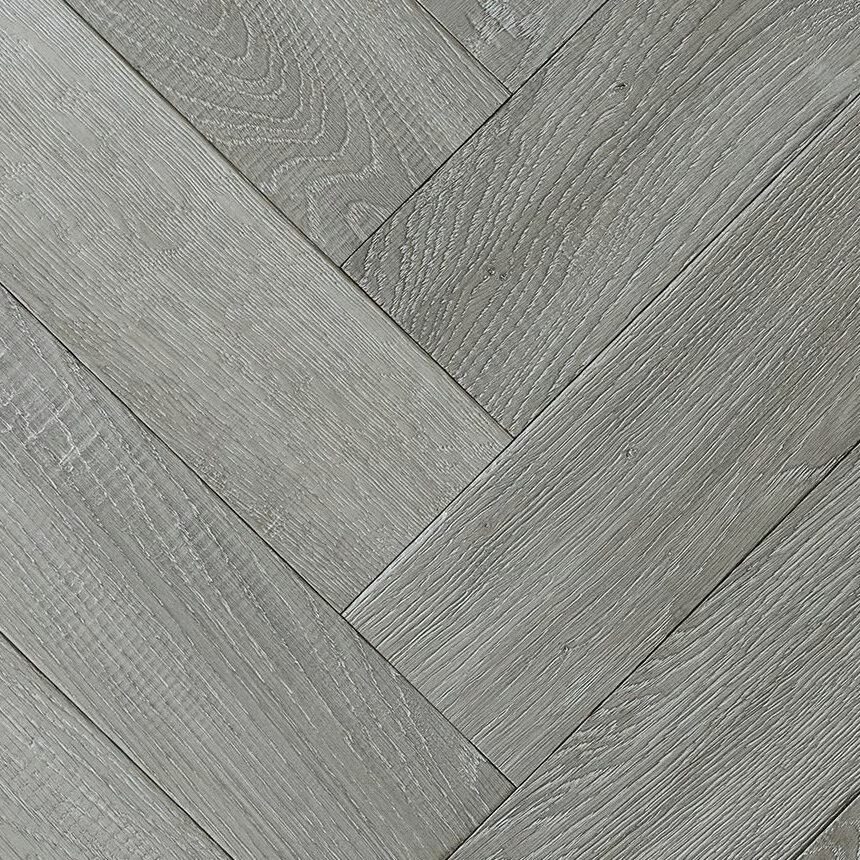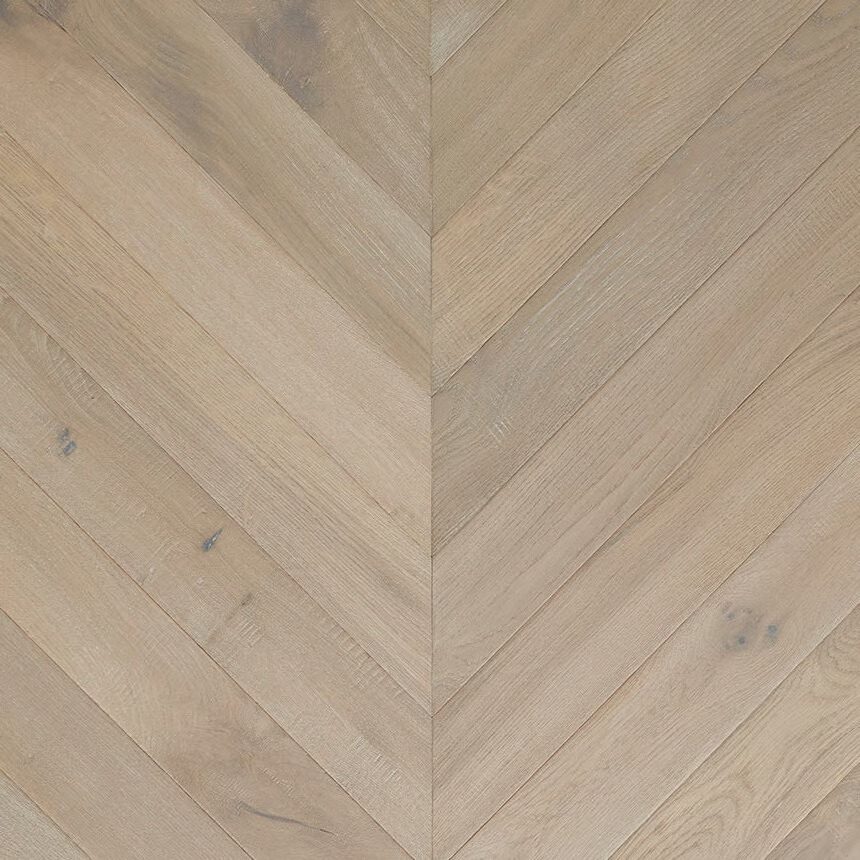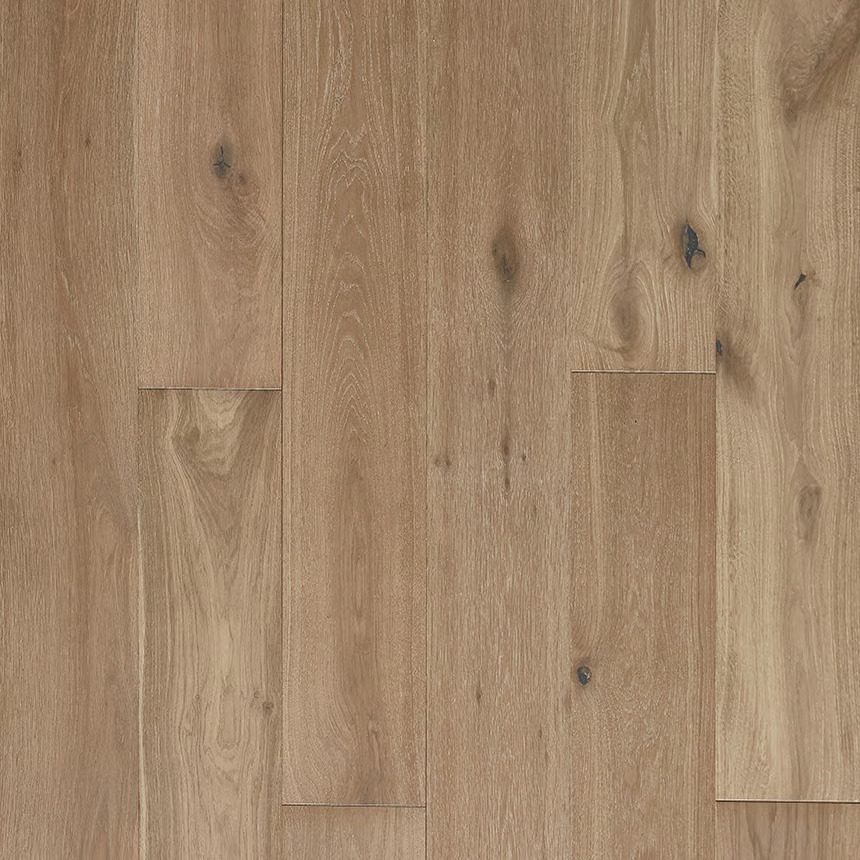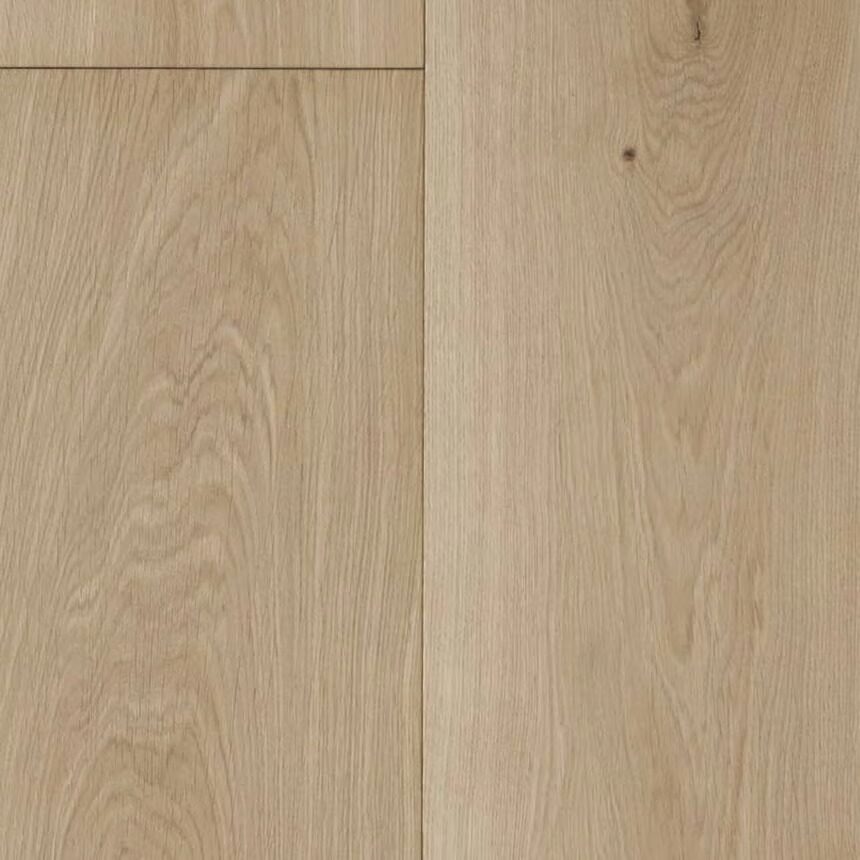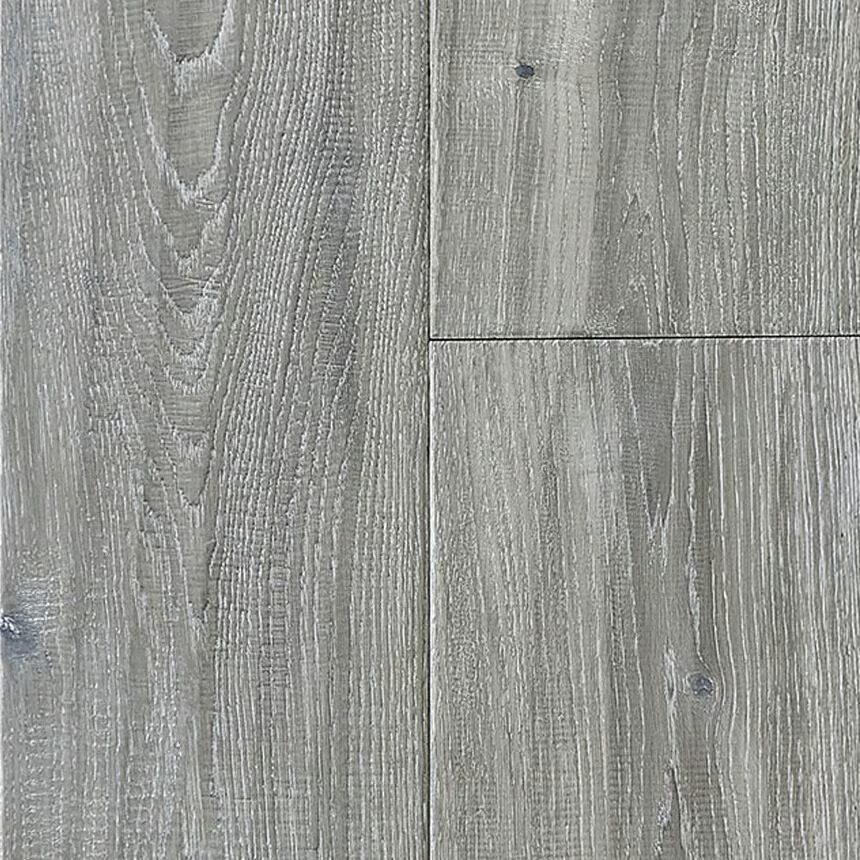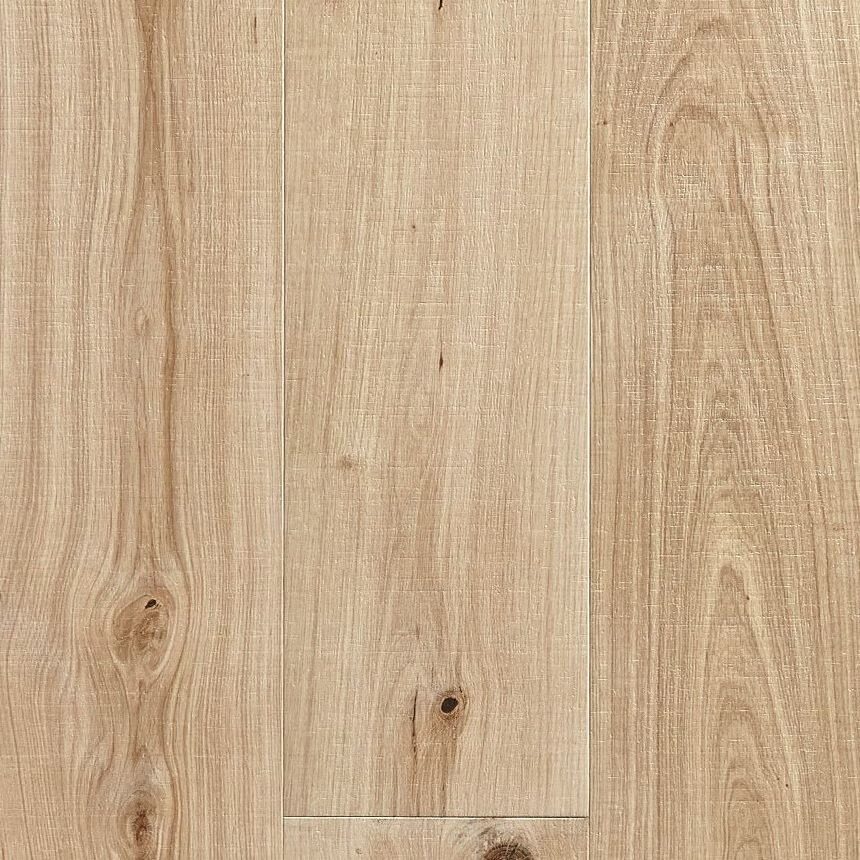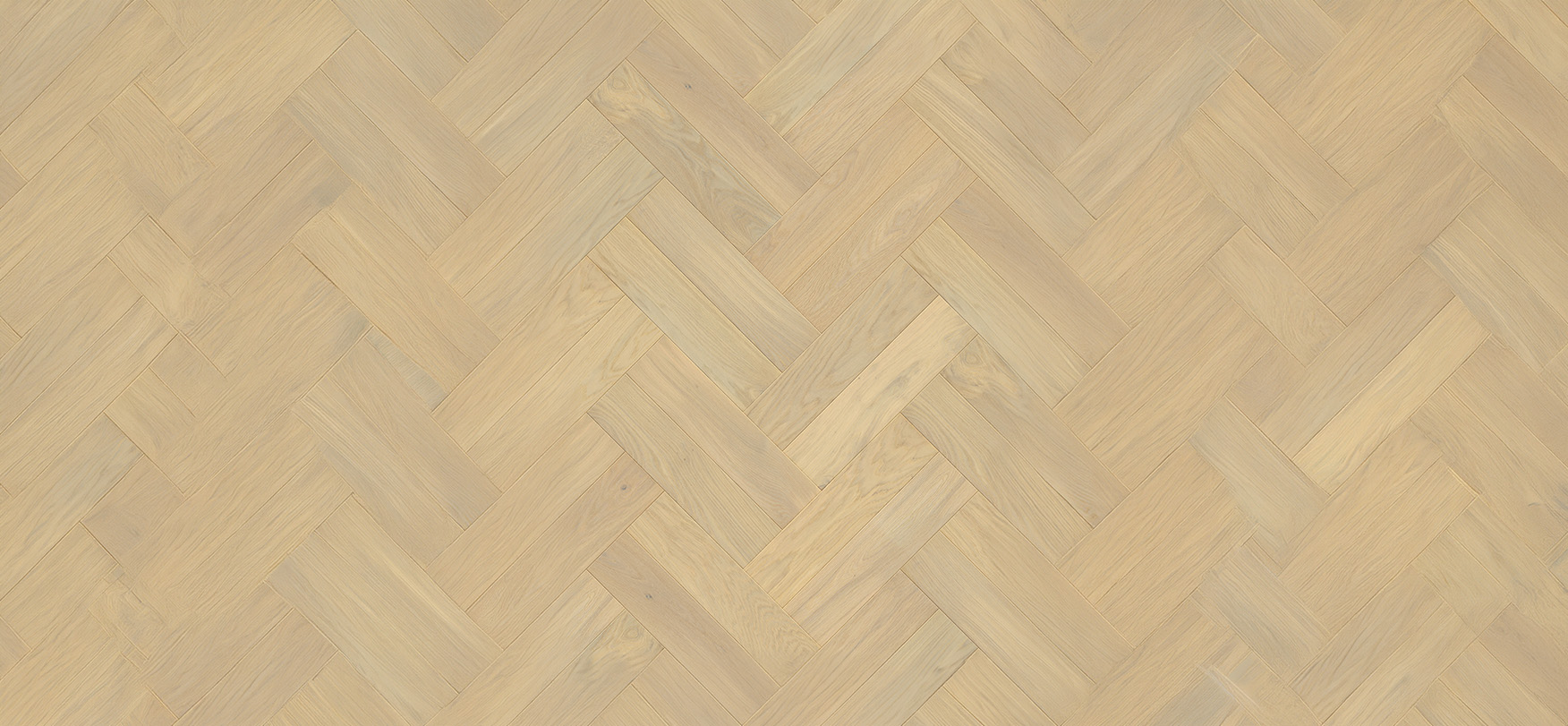
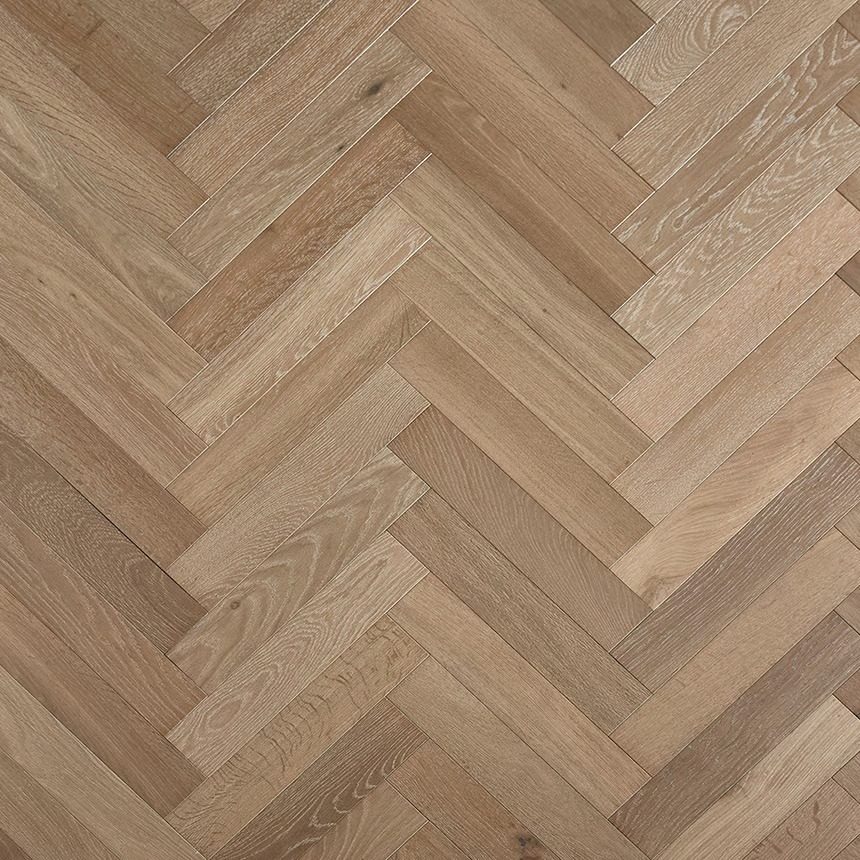
Light oak herringbone parquet flooring in a sophisticated interior

Collection No. 02

Herringbone

The most architectural of floors. A pattern that has defined great interiors for four hundred years — now engineered for the way homes are built today.

The Pattern

A floor that announces itself, quietly.

Herringbone is older than most of the great houses it lives in. The pattern first appeared as Roman road paving — clay bricks set at angles to better resist the movement of heavy carts — before finding its way into 16th-century French chateaux as parquet de menuiserie. By the time the Galerie des Glaces was laid at Versailles in the 1680s, parquet was the floor of choice for every room that mattered.

What gives herringbone its enduring appeal isn't just the craftsmanship it implies. It's what the pattern does in a room. A plank floor draws the eye down a corridor; a herringbone floor holds you where you are. It grounds a space, adds rhythm, catches light differently from every angle. In a formal drawing room it feels classical; in a glass-walled kitchen extension it becomes strikingly modern.

“A plank floor draws the eye down a corridor; a herringbone floor holds you where you are.”

More than one way to lay it

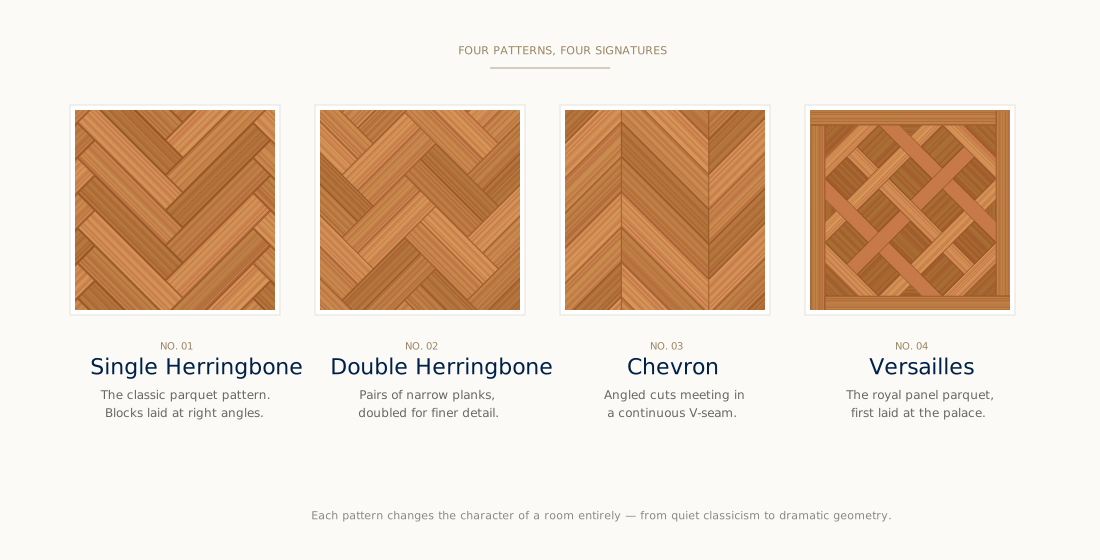
Most people use “herringbone” as shorthand for anything with a zigzag, but the family is broader than that. Single herringbone is the classic rectangular-block pattern. Double herringbone pairs narrow planks for a finer, more delicate effect. Chevron cuts each plank at an angle so the points meet in a continuous V — more contemporary, more demanding to fit, unmistakable in person. And Versailles panels — the most elaborate of all — are square sections woven from interlocking rails and central diamonds, each one a piece of furniture in its own right.

We stock all four, in engineered oak and in luxury vinyl. The right choice depends on the room, the ceiling height, the light, and — honestly — how much of a statement you want the floor to make.
Know the Difference

Four patterns, four signatures.

It’s worth understanding what you’re looking at — each pattern gives a room a different voice.

Comparison diagram showing the four herringbone pattern variants: single herringbone, double herringbone, chevron and Versailles panel

The Material Beneath the Pattern

Engineered oak or luxury vinyl?

Herringbone isn’t a material — it’s a way of laying a floor. The pattern can be created in several different substrates, and the choice between them is a practical one.

Engineered herringbone

The traditional choice, and the one most people mean when they think of parquet. Real oak or walnut, cut into blocks or chevron sections, laid with each piece individually fitted. It has the warmth of timber and the authority of the pattern’s history — and with engineered construction beneath, it works happily over underfloor heating where solid parquet wouldn’t.

Luxury vinyl herringbone

Increasingly sophisticated, and the right answer in kitchens, hallways and wet rooms where real wood would struggle. Modern LVT herringbone reads convincingly as timber at arm’s length, with the added benefits of full waterproofing and softer acoustics — which matters in flats and on upper floors.

Why we recommend laying with an edge border

A small detail that changes the whole floor. Framing a herringbone field with a single plank border along the walls settles the pattern into the room — otherwise the zigzag runs into the skirting at every angle and the effect can feel restless. It’s an extra day’s fitting and two or three per cent more material; almost always worth it.

Where It Works

At its best in the rooms that deserve it.

Herringbone is a statement floor. Choose the rooms where you want it to speak.

Living & Dining

The archetypal home for herringbone. The pattern centres a room, gives scale to even modest spaces, and reads beautifully under pendant lighting. A border along the walls completes the effect.

★★★★★ · Ideal

Open-plan Kitchens

Herringbone has become the signature floor of the modern kitchen extension. Run continuously through the cooking, dining and living zones, it unifies the space while adding the architectural heft the pattern is known for.

★★★★★ · Ideal

Hallways & Entrances

A particularly well-chosen place for herringbone. The pattern catches the light from the front door, runs the length of the hall, and makes the arrival into the house feel considered. Choose a narrower block for a tighter, more modern read.

★★★★★ · Ideal

Principal Bedrooms

Less traditional, increasingly popular. A herringbone floor gives a bedroom the feel of a hotel suite — particularly in a smoked or dark-finish oak, where the pattern reads as texture rather than contrast.

★★★★☆ · Excellent

Bathrooms

Not in real wood — but LVT herringbone works beautifully here, particularly in stone-effect finishes. Waterproof, warm underfoot, and the pattern brings architectural interest to what is often a purely functional room.

★★★★★ · LVT only

Small Rooms

Counter-intuitively, herringbone works surprisingly well in compact spaces. The pattern adds visual complexity that makes a small room feel considered rather than cramped. Choose a lighter tone to preserve the sense of space.

★★★★☆ · Works beautifully

The Vocabulary

A short glossary, plainly written.

100+ ranges in our showroom

From quiet classicism to dramatic geometry.

Our showroom holds over thirty herringbone and chevron ranges — in oak, walnut and luxury vinyl, across tones from whitewash to dark smoked. The character of your room will tell us which is right.

See the Full Collection in Hampton Hill

Take the next step

Herringbone has to be seen at scale.

A single sample doesn’t tell you what a herringbone floor will feel like laid across an entire room. In our Hampton Hill showroom, several of our herringbone ranges are displayed as full installations — the only way to really judge the pattern in your eye.