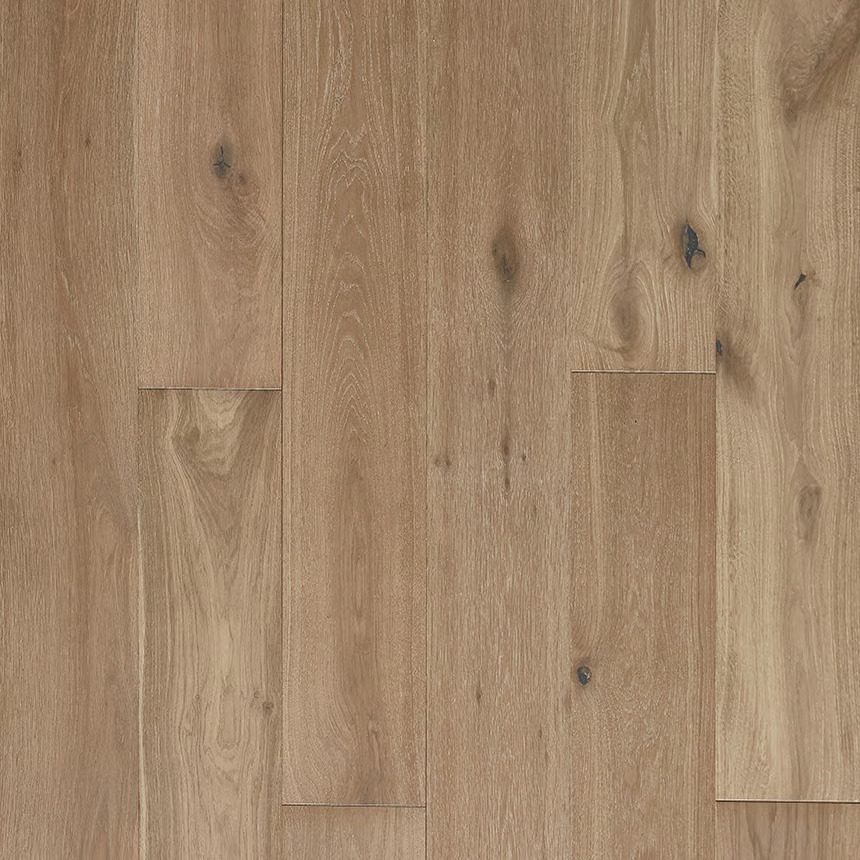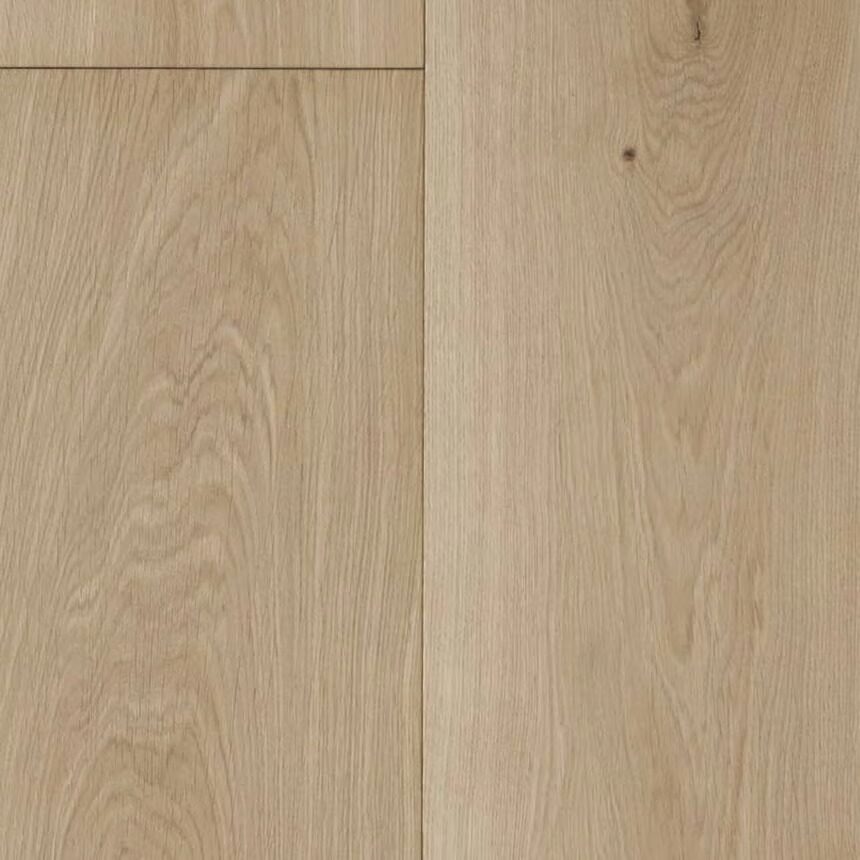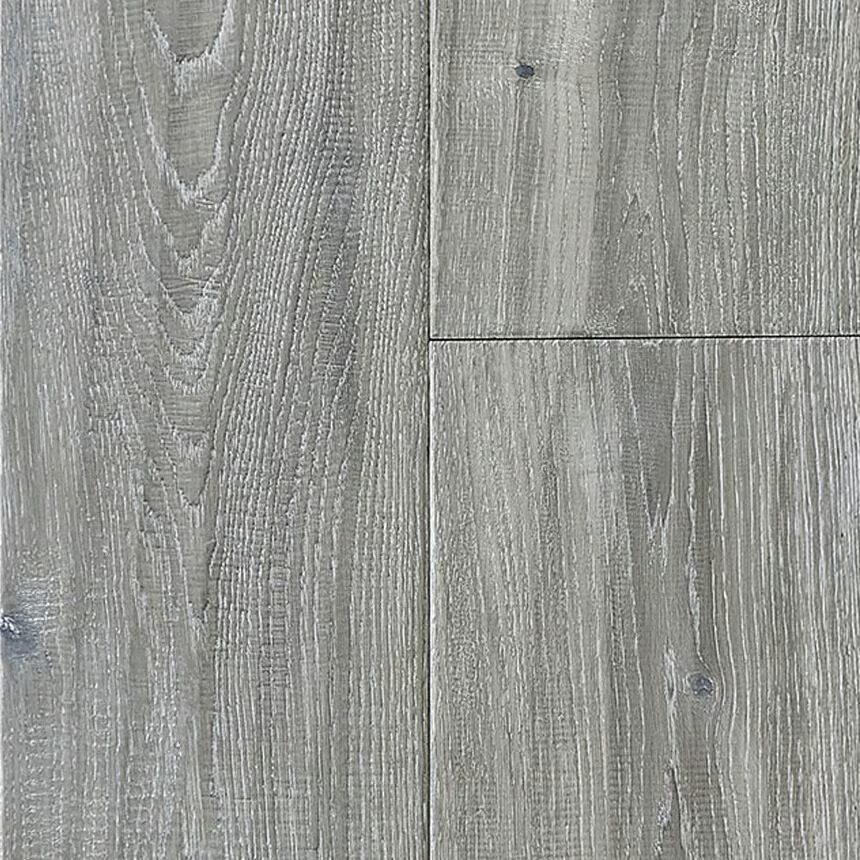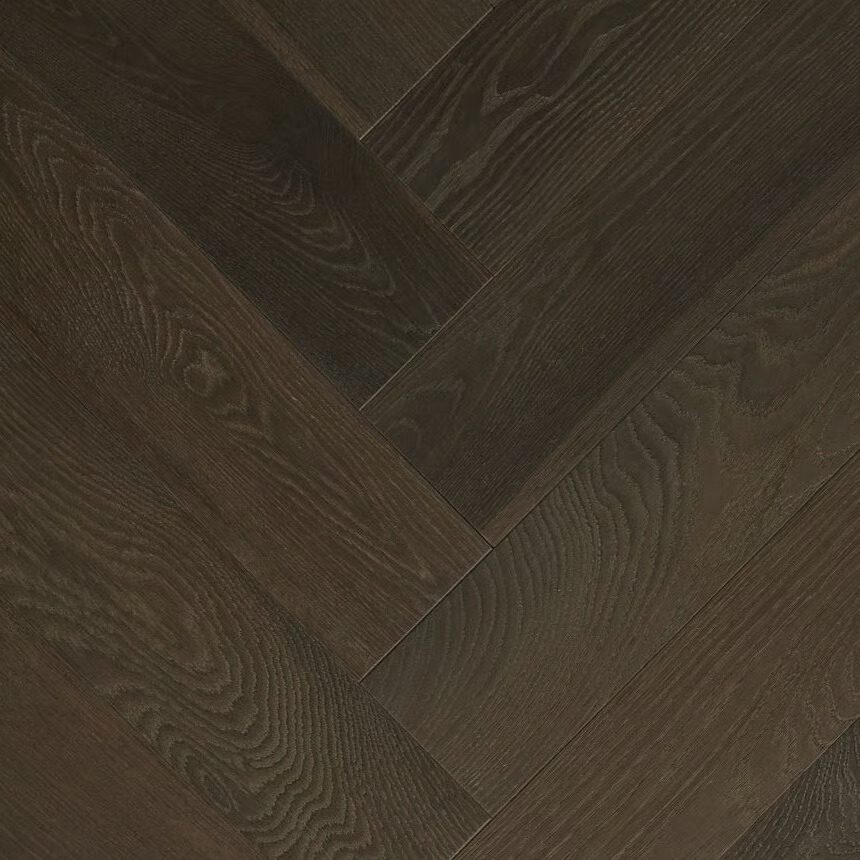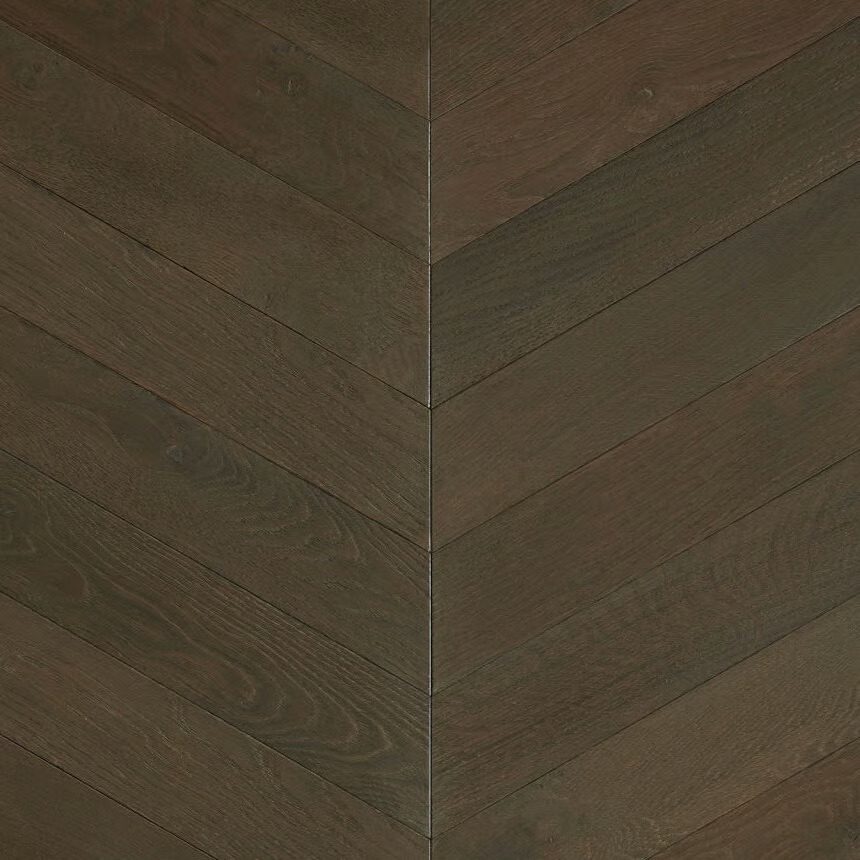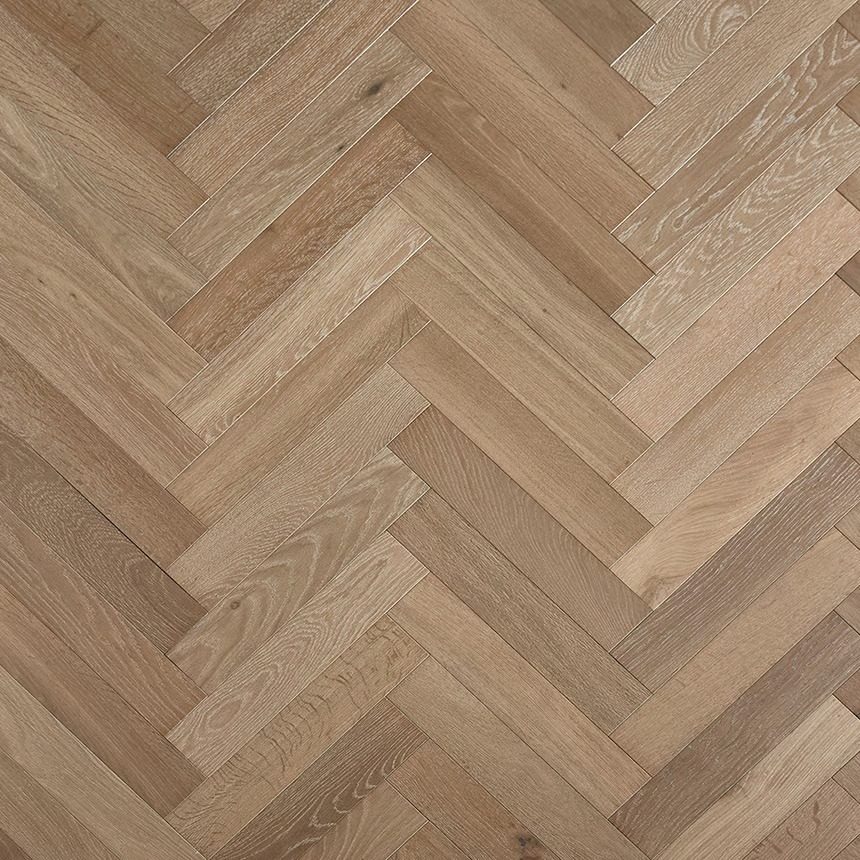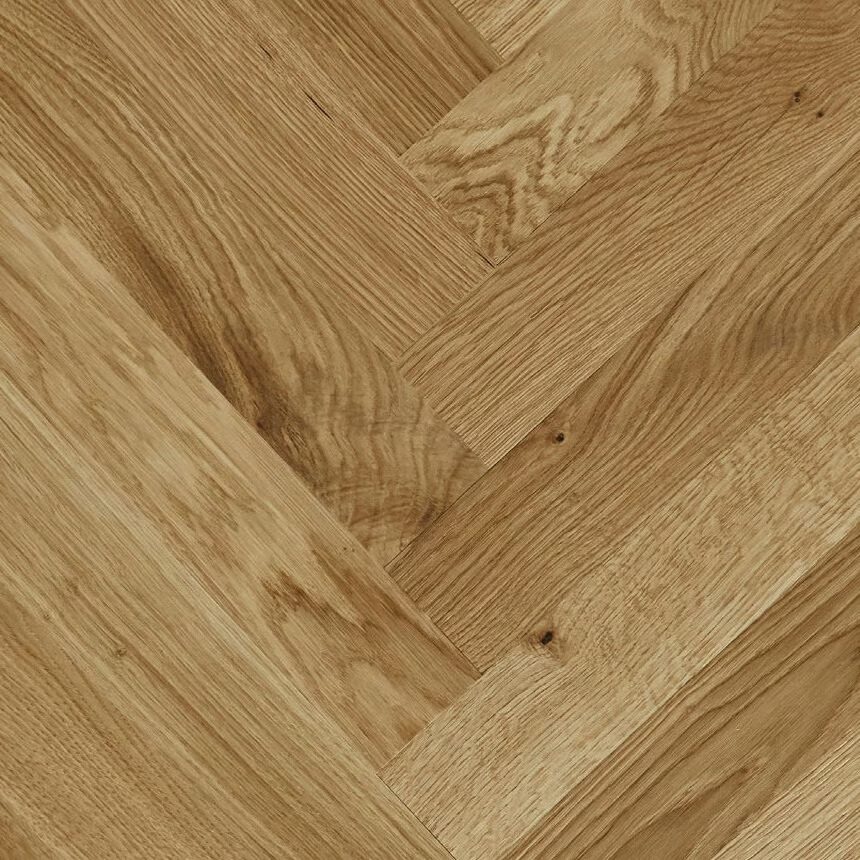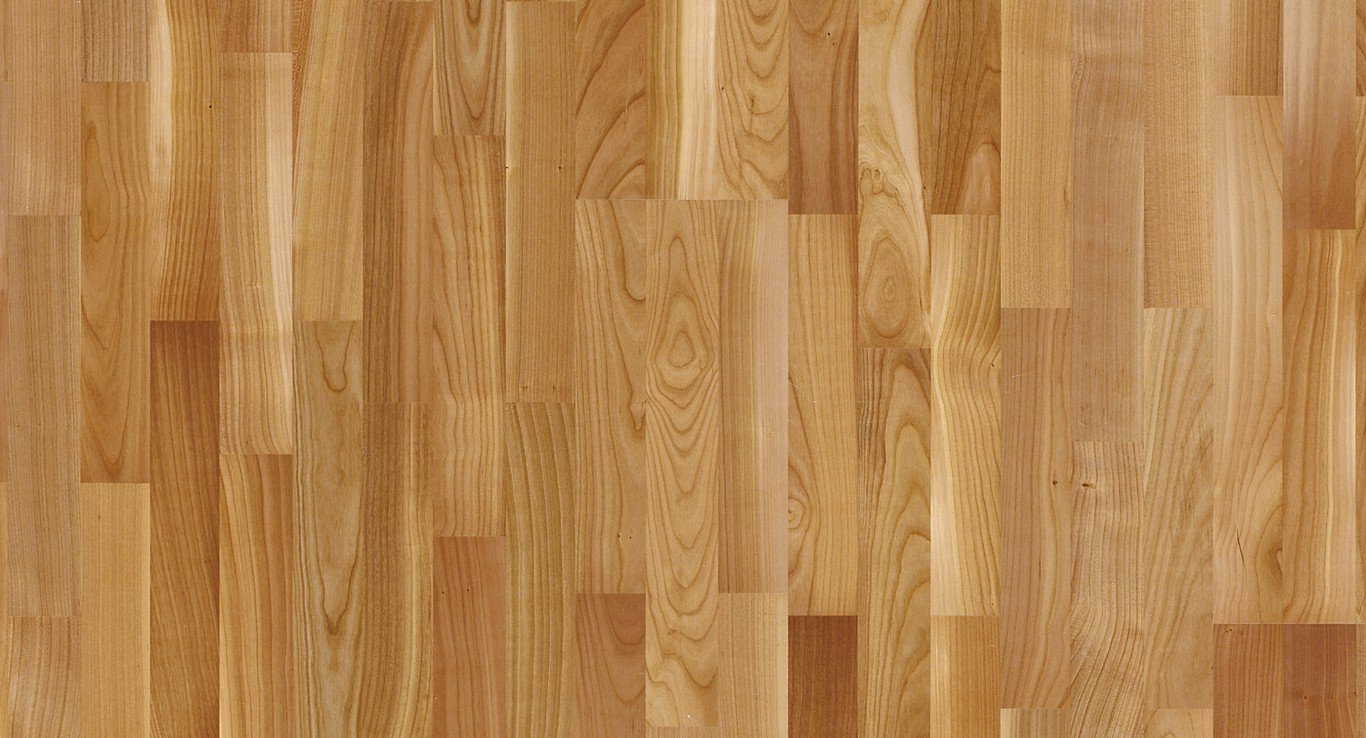
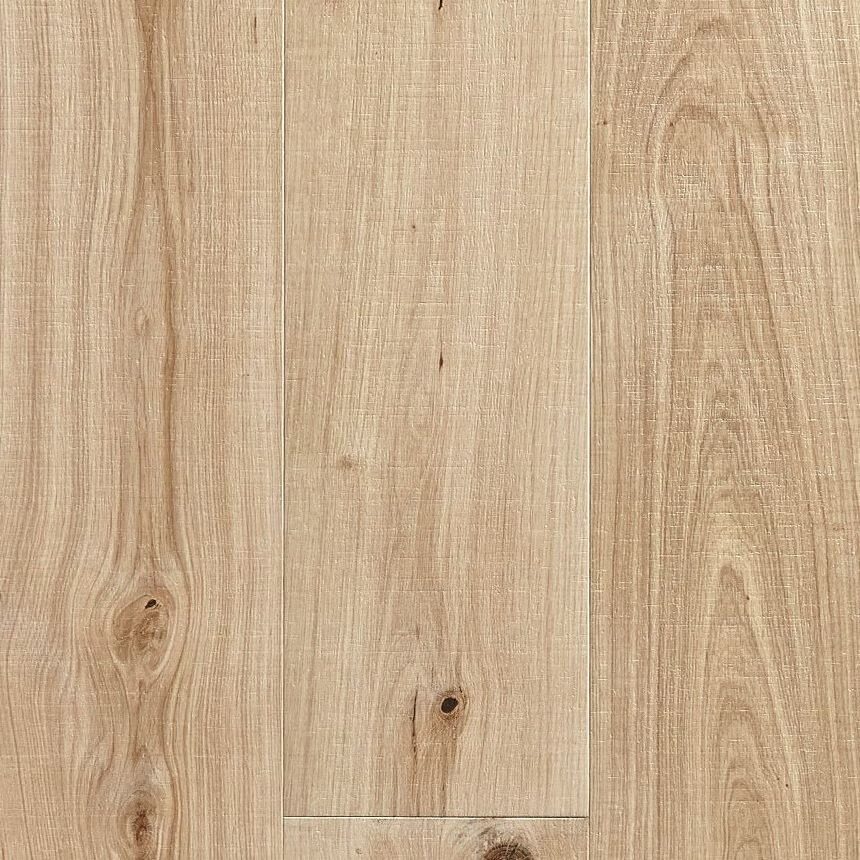
Solid oak plank flooring with natural grain and sawn texture

Collection No. 05

Solid Wood

One tree, one board, one floor for generations. The heritage material for period properties, suspended floors and homes built for the long view.

The Material

A floor with nothing to hide.

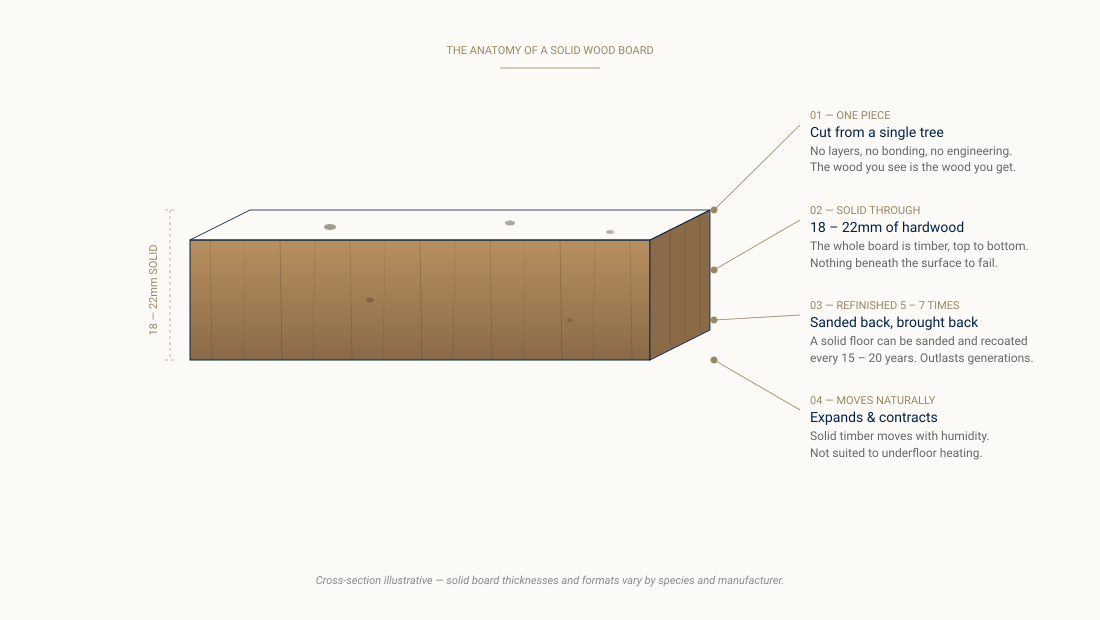
Solid wood is what it sounds like — a single piece of hardwood, cut from a single piece of timber, from top to bottom. No plywood core beneath, no printed image, no engineered layers pulling against each other. What you walk on is what the tree grew. It is the original flooring material, and for a certain kind of home, it remains the right answer.

Solid oak, walnut or ash boards are typically 18–22mm thick — twice the depth of most engineered alternatives, with the entire thickness being real timber. That depth is its defining virtue. A solid floor can be sanded and refinished five, six, seven times over its working life. It outlives its first finish, its second, the fashion it was laid in, probably its owner. A Victorian oak floor in a well-kept house today is often the floor that was laid when the house was built.

“What you walk on is what the tree grew. No layers, no engineering — just timber.”

Why it still has a place

Engineered wood has, for most modern homes, become the sensible choice. But solid wood hasn’t been made obsolete — it has simply settled into the rooms and buildings where it genuinely belongs. Period properties with original suspended timber sub-floors. Homes without underfloor heating. Owners who want the floor to be part of the building’s lineage rather than a contemporary upgrade. In those contexts, nothing else quite does the same job.

There is also something about solid wood that engineered alternatives cannot reproduce. It is the sound it makes underfoot — a density, a deadness to it, the difference between a marble countertop and a laminate one. It is the way a repaired knot or a long grain stroke shows the whole board is one piece. Most people never consciously notice these things. Some people know immediately when they’re missing.
Inside the Board

A cross-section, honestly.

There isn’t much to explain. That’s the whole point.

Cross-section diagram of a solid wood board showing one continuous piece of timber, 18-22mm thick

Where It Works

The right answer for specific homes.

Solid wood isn’t the universal choice it once was — but in the right context, nothing else will do.

Period Properties

Victorian, Edwardian and Georgian homes with their original suspended timber floors. Solid boards sit naturally on floor joists, allow the building to breathe, and extend the character the house was built with.

★★★★★ · The right choice

Living & Dining

Formal reception rooms in well-established homes. A solid oak floor here reads as heritage — something inherited rather than chosen — particularly in wider plank formats with a natural oil finish.

★★★★★ · Ideal

Bedrooms

Quieter than in busy ground-floor rooms, bedrooms allow solid wood to develop its patina undisturbed. The boards darken gently over the years, taking on a depth that no new floor can match.

★★★★★ · Ideal

Underfloor Heating

Not recommended. Solid wood moves with temperature and humidity; UFH creates exactly the conditions that cause boards to cup, gap and squeak. For heated floors, engineered wood is the right answer — not a compromise.

☆☆☆☆☆ · Use engineered instead

Kitchens

Possible but challenging. The combination of spills, temperature swings and heavy foot traffic is hard on any wood floor, and a solid board can’t take the beating that engineered or LVT handles. If you must — specify a robust lacquered finish and mop quickly.

★★☆☆☆ · Think twice

Bathrooms & Wet Rooms

No. Standing water and solid wood don’t belong together in any configuration. For the look of timber in a bathroom, specify a wood-effect LVT — it’s the only honest answer.

☆☆☆☆☆ · Not suitable

The Long View

Three things to know before you commit.

It will move, and it will gap.

Solid wood is alive in a way engineered wood isn’t. It expands and contracts with the seasons — closing tight in a humid summer, opening small gaps in a dry winter when the central heating runs. This isn’t a flaw; it’s the nature of the material. A well-fitted floor hides it; a badly-fitted one reveals it. Acclimatisation and correct expansion gaps at the walls are non-negotiable.

Subfloor matters more than with engineered.

A solid wood floor needs to be either secret-nailed to floor joists or battened down onto a prepared substrate. Floating installation isn’t an option. If you have a concrete slab rather than timber joists, the practical and economical choice is engineered — solid boards on concrete require a considerable amount of preparatory work to do properly.

It rewards patience.

A solid oak floor isn’t at its best the day it’s laid. It’s at its best ten years in, when the oil has soaked deep into the grain, the surface has developed its patina, and the board has settled into the room. The floor you fit now is laying down for the floor that will be there in a decade.

The Vocabulary

A short glossary, plainly written.

100+ ranges in our showroom

Oak, walnut and ash — in all the grades that matter.

From prime-grade, almost knot-free boards for formal rooms to full-character rustic grades for period properties, our showroom holds over twenty-five solid wood ranges. All responsibly sourced, all finished in oil or lacquer, all chosen for the way they age.

See the Full Collection in Hampton Hill

Take the next step

Solid wood is the floor you live with, not look at.

It’s a material that rewards handling, smelling, feeling the weight of in your hand. Visit our Hampton Hill showroom to handle the full selection, hear how a solid board sounds underfoot, and talk through whether it’s genuinely the right answer for your home.